
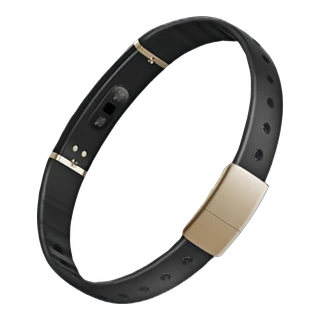
Screenless Fitness Band Manufacturer & ODM
Screenless health bands and custom wrist-worn devices, with hardware, firmware and companion software developed as one product.
ExploreQX TECH / BUYER’S GUIDE
How to specify comfort, pairing, synchronization and battery expectations before committing to a custom screenless wearable.
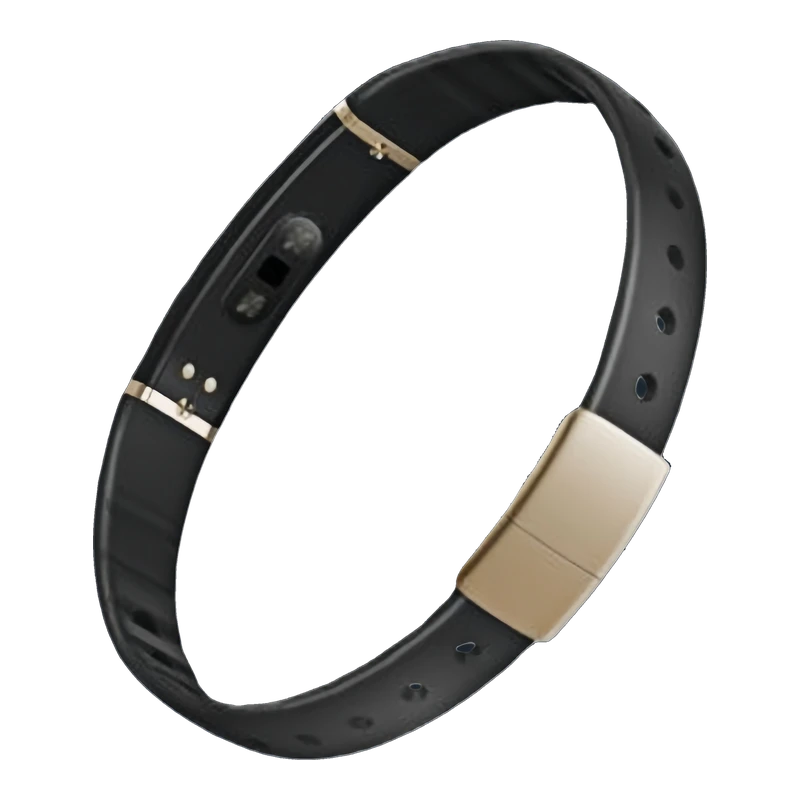
A screenless fitness band moves most visual interaction to a companion app. That changes the product brief: the wearer still needs to know whether it is paired, recording, charging or out of power. Evaluate the device, firmware and app together rather than treating the absence of a display as the complete design.
Describe where and how long the device will be worn: at a desk, during sleep, during exercise or while changing clothes. Write down the fit range, clasp behavior, preferred materials and how a user identifies the correct orientation. Evaluate the full assembly, not just the electronics module.
The C16 provides a real QX reference: a screenless design, zinc-alloy head, TPU strap and approximately 16 g total weight. Its published head dimensions are 38 × 13.8 × 5.5 mm. These are reference-model specifications, not guaranteed dimensions for a new sensor set, enclosure or battery.
Use this matrix in a sample review. The exact feedback method—app text, an indicator, vibration or another mechanism—must be supported by the selected hardware. Do not add a vibration promise simply because a UX sketch includes it.
| Situation | Question to resolve | Acceptance evidence |
|---|---|---|
| First use | How does the user discover and pair the correct band? | A new user completes pairing from the supplied instructions |
| Phone unavailable | What continues on the band, and what waits? | Recorded behavior during disconnection and reconnection |
| Data gap | How are missing measurements distinguished from zero? | App screen and exported record agree on missing data |
| Low power | How does the wearer know, and what happens next? | Observed low-battery and charging-state behavior |
| Replacement | Can a user move to a new band without mixing records? | Unpair, re-pair and account-association tests |
For the C16, the catalog lists a 30 mAh battery and 7–10 days of typical use. A custom project should define its own profile: measurement intervals, synchronization frequency, notifications and operating conditions. Changing that profile means the catalog headline is not sufficient acceptance evidence.
Ask for a documented test configuration and compare like with like. Separate recorded observations from algorithm-derived estimates, and show gaps when usable data is unavailable. QX health functions are for general wellness reference, not medical diagnosis. Medical use or medical claims require a separate product and regulatory assessment, not a marketing wording change.
Specifications belong to the named model and configuration. Custom changes require separate evaluation. Health functions are for general wellness reference only, not medical diagnosis.
Screenless health bands and custom wrist-worn devices, with hardware, firmware and companion software developed as one product.
ExploreA software acceptance checklist for device brands: pairing, data consistency, updates, account ownership and operational handover.
ExploreAn ungated, reusable brief for wearable hardware, screenless bands, companion software and AI-enabled devices.
Explore